WHAT IS A SOLAR PV SYSTEMS
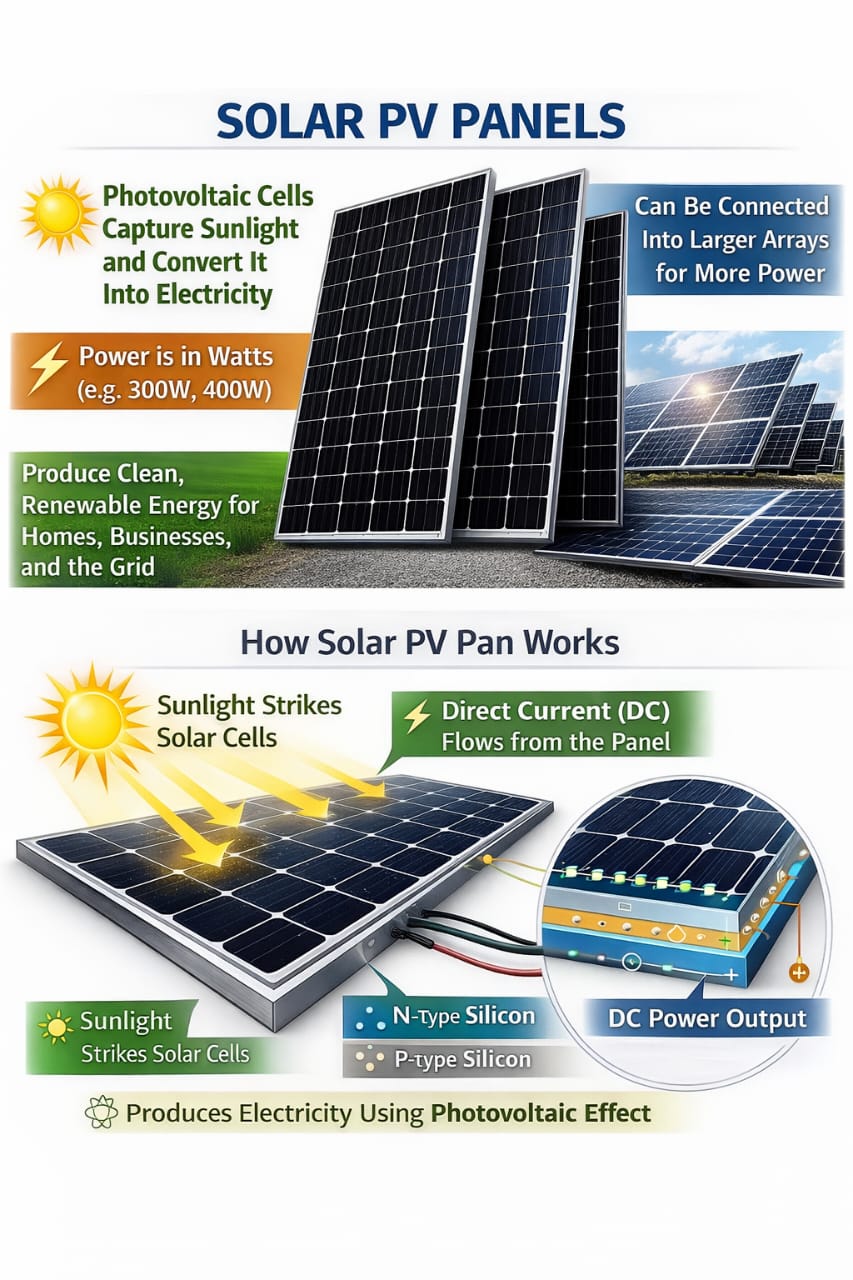
A Solar PV (Photovoltaic) system, is a green energy solution, which generates renewable energy from the sun. Photovoltaic systems utilize solar cells to collect solar energy from sunlight and convert it into direct current, DC electricity. This electricity once passed through an inverter and converted into Alternating Current (AC) is safe to use to power your household appliances. A solar PV system is the perfect sustainable solution for anyone interested in reducing their carbon footprint and any bills. This is because generating Solar Energy doesn’t produce any pollutants and is free.
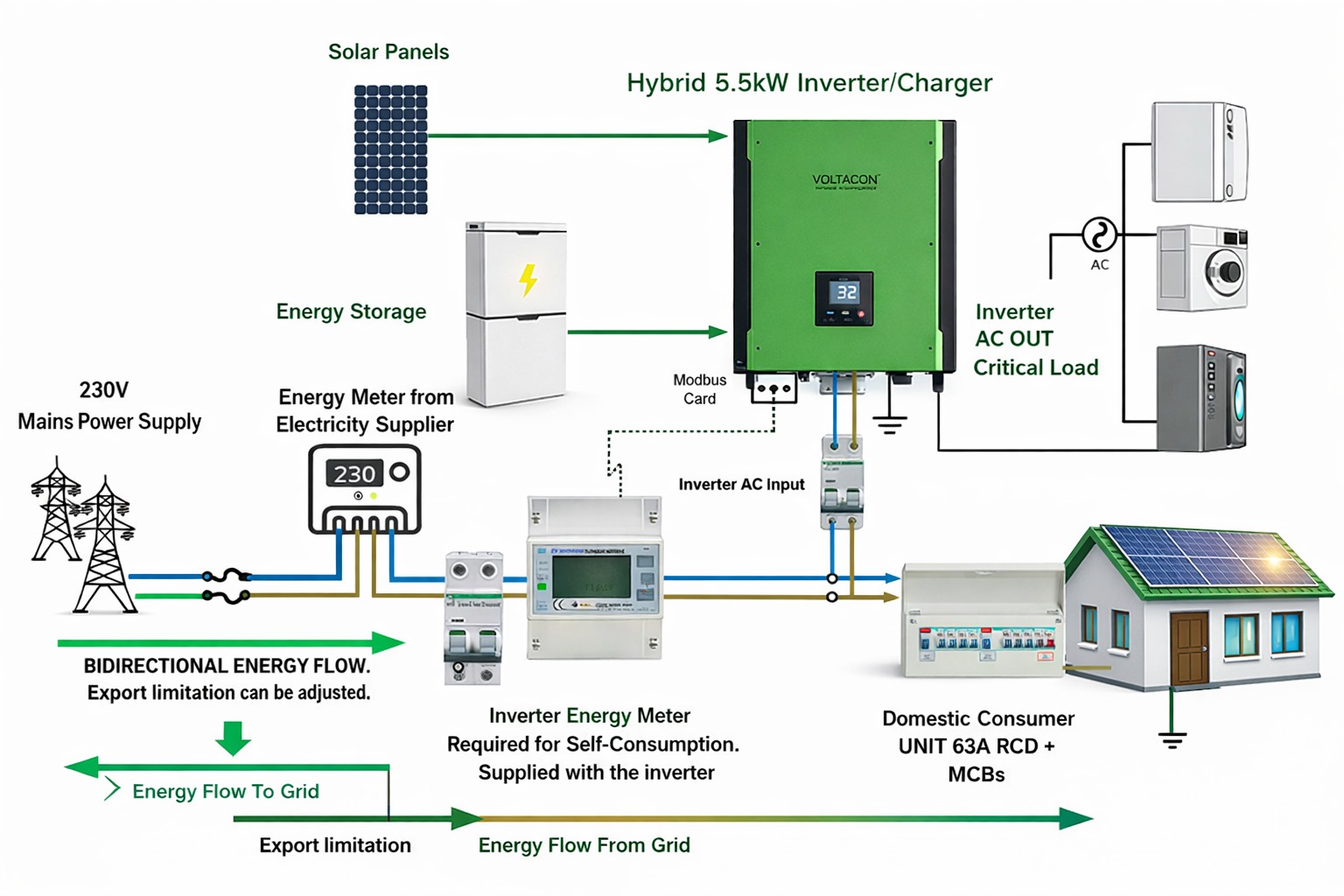
In the current state of power supply inconsistences in our nation, a Solar PV system might be a step in the right direction for your home. However which type of Solar PV should you install? In the diagram below we will explore the three different types of solar panel systems and hopefully point you in the right direction.
THE DIFFERENT KINDS OF SOLAR PV SYSTEM
There are three main types of solar PV systems: grid-tied, hybrid and off-grid. Each type of solar panel system has their advantages and disadvantages and it really comes down to what the customer wants to gain from their solar panel installation.
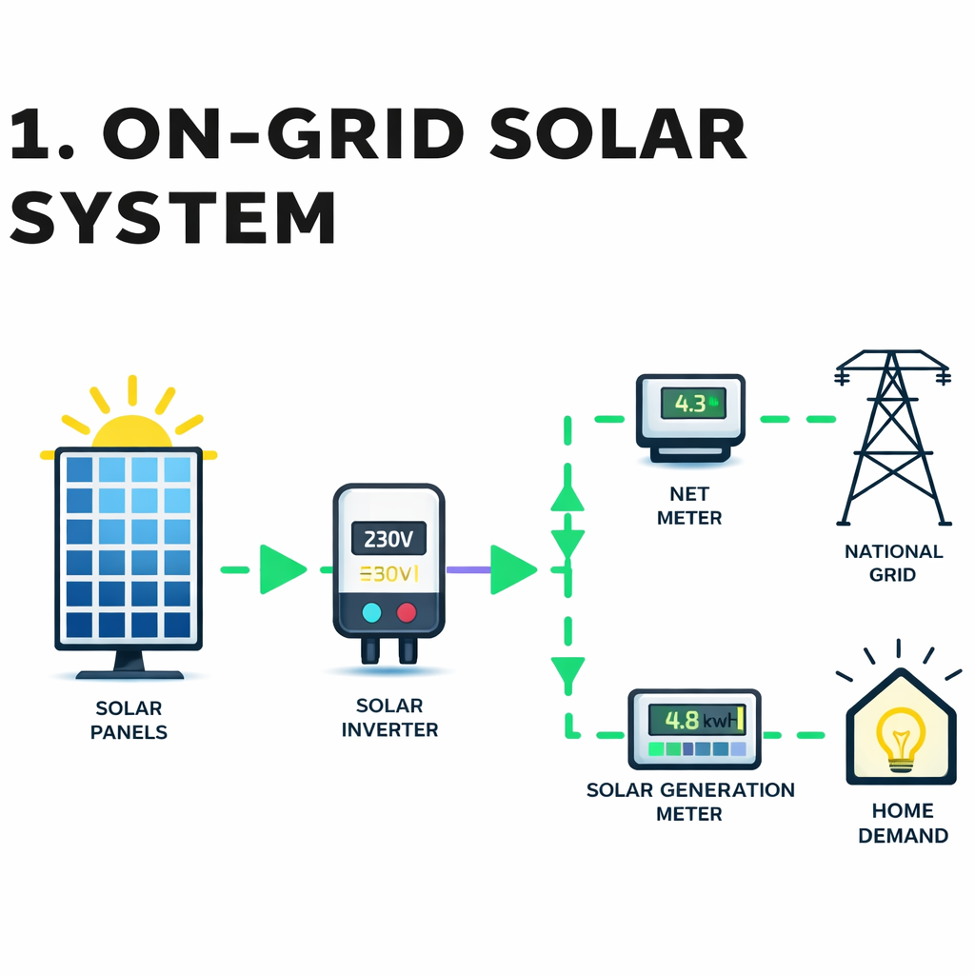
An on-grid solar system or grid tied, is a solar PV system which connects directly to the National Grid. This kind of Solar PV System is the most common amongst home and business owners. This type of system is perfect for someone who is already connected to the Grid, yet wants to reduce their carbon footprint and energy bills.
An on-grid solar system doesn’t require a battery storage system, and is connected to the National Grid directly via a Solar or micro inverter. As the solar panels convert sunlight into energy, your home uses this green energy supply to power your appliances. When you generate any excess solar energy, this electricity is exported back to the Grid where you are either paid through the Feed-in-Tariff. Which is an added bonus. A key advantage of an on-grid system is the security of knowing than your energy supply will always be supported by the National Grid.
One main disadvantages of this type of solar PV system, is that because it uses a grid-tied inverter, when the National Grid fails, so does your solar system. Simply meaning you won’t have any source of backup power. But don’t panic. If you have an on-grid solar system, it can be upgraded to a hybrid system by adding a battery at any time. This is known as retro fitting, and requires installing an AC coupled control management system alongside the battery of your choice. Adding battery storage to your Solar PV System, can provide you with solar power even during such outages. This is known as a Hybrid System.
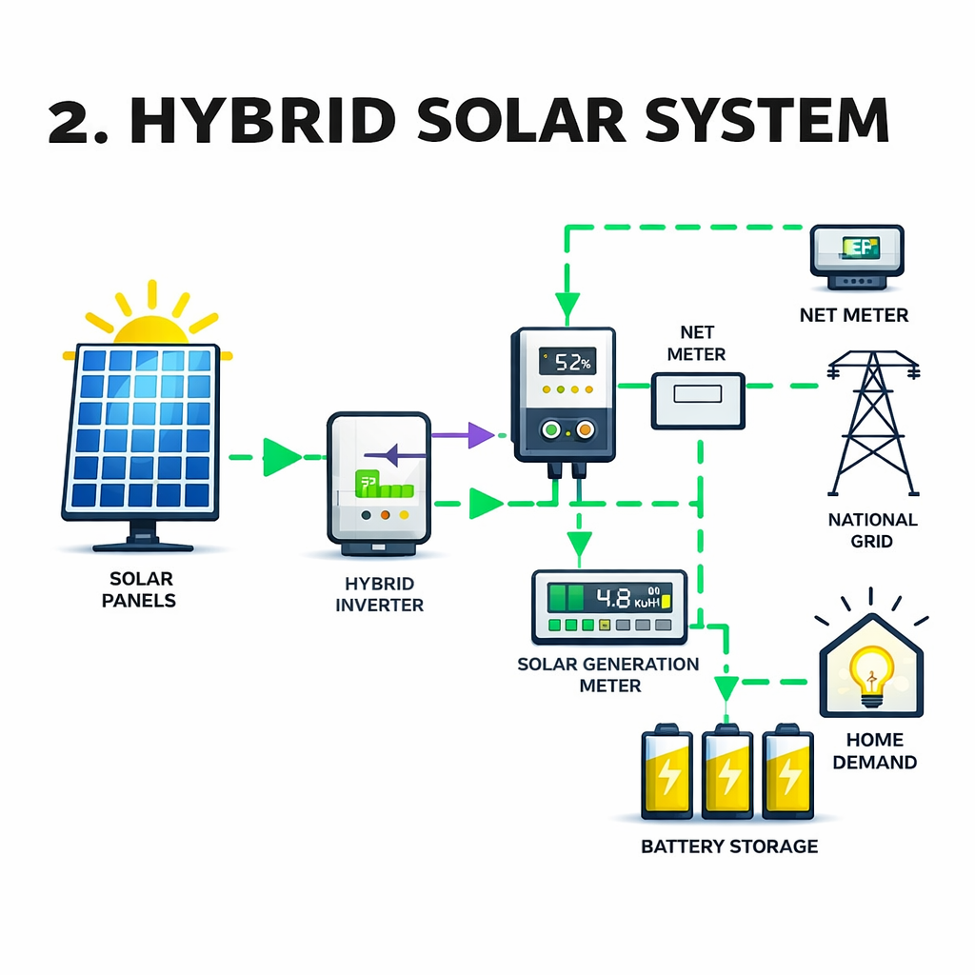
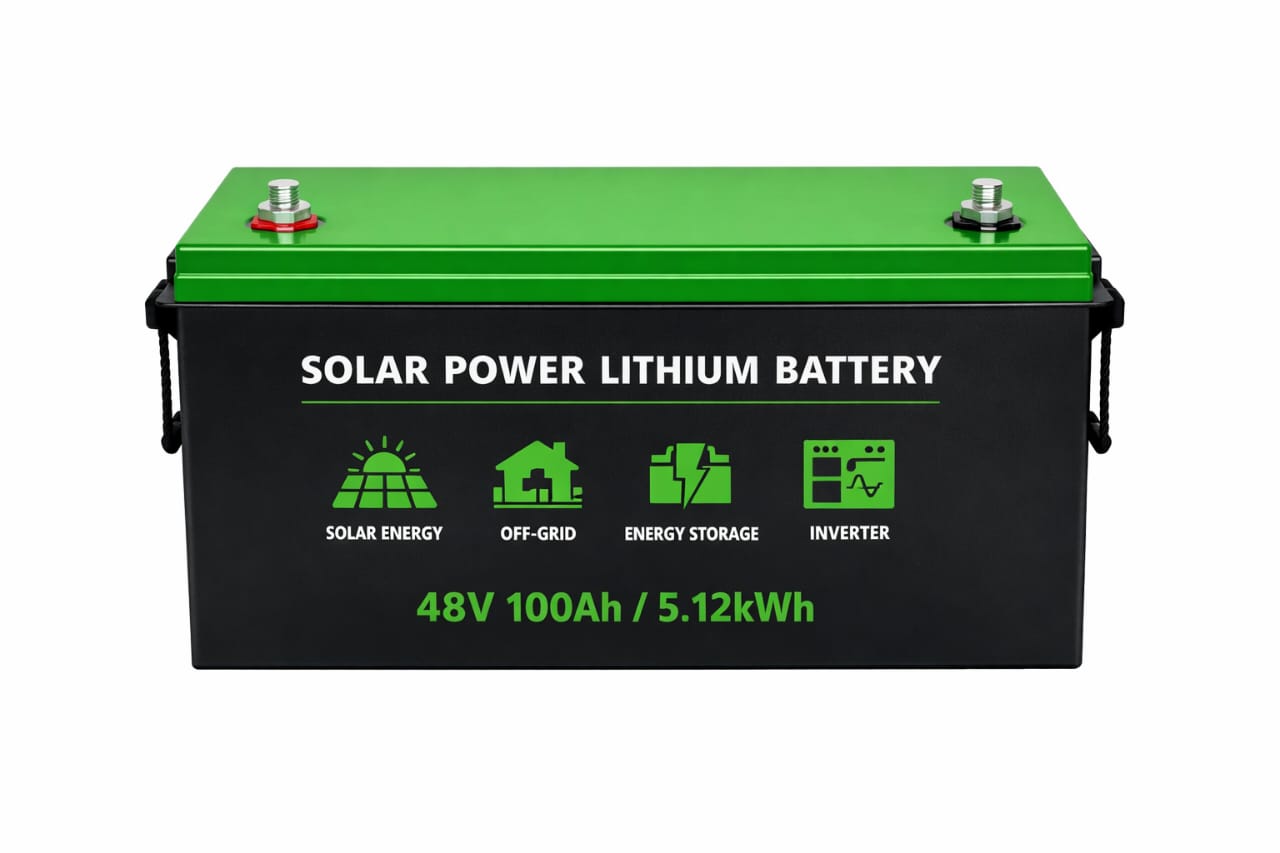
Hybrid Solar systems combine the technology of Solar Panels and Solar batteries to create a green energy solution which provides a back-up supply of energy. Although a hybrid PV system remains connected to the National Grid, any solar energy generated is first stored in a home battery solution before going to the grid.
The main advantage of a hybrid solar system is that by storing your surplus energy in a battery, you can use your solar energy to power your home during the night, and will export less energy back to the Grid. What’s more, unlike an on-grid system, when the national grid is down, you can also draw energy from your battery supply. This is known as islanding, and is particularly ideal for property owners who live in areas prone to power outages.
Hybrid solar panel systems offer great flexibility, as when you have used up all your energy in your battery, you still have the ability to draw from the grid. This makes a hybrid solar system the perfect in between solution. As an in between solution, a hybrid solar system is more budget-friendly compared to an off-grid system, however is more expensive than an on-grid system. A huge advantage of a hybrid solar system, is that you can expand your battery storage system at any time, and because you are still connected to the grid, you can also charge your batteries from cheap-off peak rates. However, because there are more components involved in a hybrid solar system, it is less efficient compared to a grid-tied system.
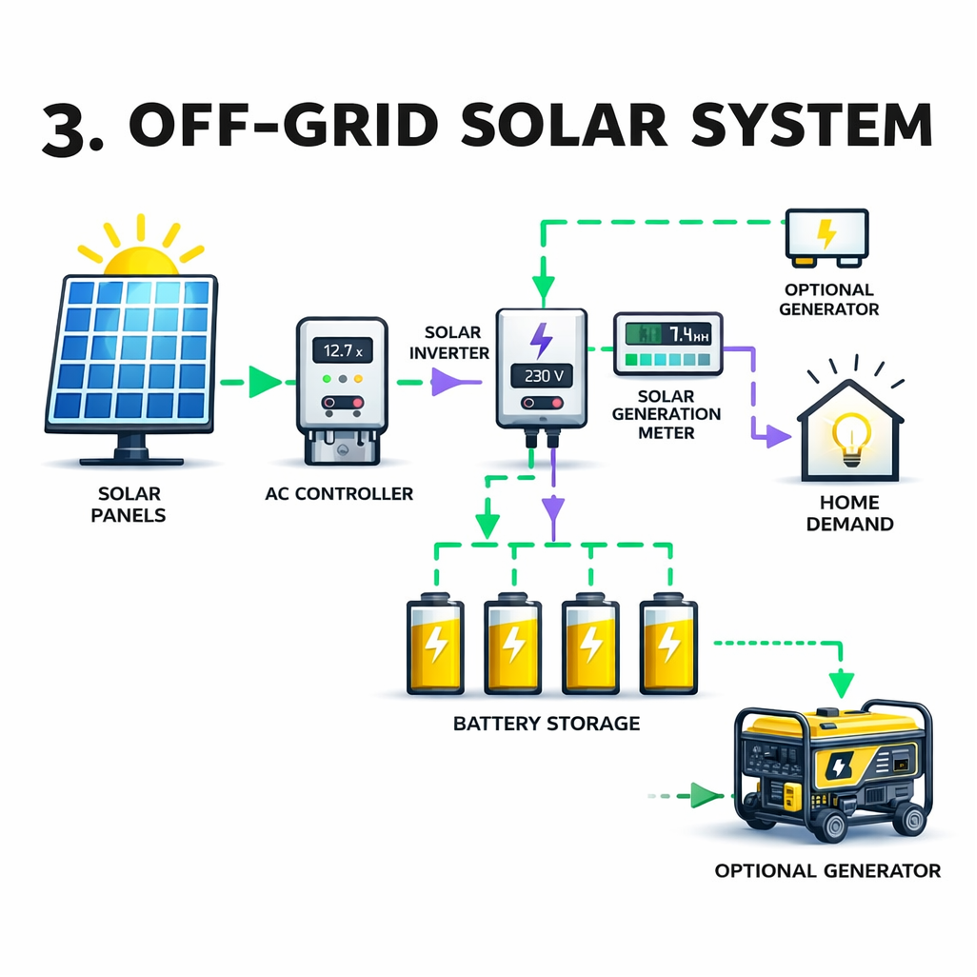
Unliked an on-grid solar system, an off-grid system has zero ties to the national grid. Making it desirable of those who can’t connect to the grid easily or wish to be energy independent.
With energy prices rising, energy independence is more in demand than ever. A complete Off-Grid Solar System contains everything you need to generate your own solar energy. Unlike hybrid systems, Off-grid systems tend to feature back-up generators and other types of renewable sources, to ensure your battery is charged fully all year round. This is because your off-grid system is the only means of energy supply you have. Off-grid solar systems have the ability to provide electricity even in the remotest of locations. Through an off grid solar system, you can be energy self-sufficient, with a supply of power no matter where you decide to live.
The benefits of an off grid system include, having no energy bill, as well as relying only on environmentally friendly resources.
As off-grid solar systems require more components they are naturally more expensive than a standard grid-tied system. However, as off-grid systems are modular, you can grow your system to meet your energy requirements at any given time. At E & P STATES ENERGY LTD we install your choice from On-grid, Hybrid to Off-grid solar systems on a nationwide scale, for prices and installation, pls, reach out to us for flexible quotation 08098988953.
WHAT TO KNOW ABOUT SOLAR SYSTEM CAPACITY FOR YOUR CHOICE DECISSION
What a solar system can power is not by the type (on-grid / hybrid / off-grid) alone, but mainly by:
Below is a practical appliance guide you can use when explaining to customers.
COMMON HOME APPLIANCE POWER RATINGS
|
Appliance |
Average Watts (W) |
|
LED Bulb |
8 – 15 W |
|
Ceiling Fan |
60 – 90 W |
|
TV |
80 – 150 W |
|
Decoder / Router |
10 – 25 W |
|
Laptop |
50 – 90 W |
|
Refrigerator (1 door) |
120 – 200 W |
|
Refrigerator (2 door) |
200 – 350 W |
|
Deep Freezer |
250 – 450 W |
|
Washing Machine |
500 – 800 W |
|
Microwave |
800 – 1500 W |
|
Electric Iron |
1000 – 2000 W |
|
Kettle / Heater |
1500 – 3000 W |
|
Water Pump (1HP) |
750 W |
|
Air Conditioner 1HP |
900 – 1200 W |
|
Air Conditioner 1.5HP |
1500 – 2200 W |
1. ON-GRID SOLAR SYSTEM (No Battery)
Depends on grid availability.
You can power ALL home appliances because:
Can power:
✅ ACs
✅ Iron, Kettle, Microwave
✅ Water pump
✅ Fridges, Freezers
✅ Lighting, TVs, fans, everything
⚠️ Limitation:
Best for: Homes with stable grid and high bills.
2. HYBRID SOLAR SYSTEM (Solar + Battery + Grid)
This is the most flexible system.
Two outputs usually exist:
What runs on inverter/battery (during outage):
✅ Lights, fans, TV, router
✅ Fridge / freezer
✅ Laptop, CCTV
✅ 1 small AC (depending on inverter size)
✅ Water pump (short time)
What runs only when grid is present:
⚠️ Iron
⚠️ Kettle / Heater
⚠️ Microwave
⚠️ Multiple ACs
Because these drain batteries very fast.
Best for: Homes in Nigeria with outages.
3. OFF-GRID SOLAR SYSTEM (No Grid at all)
Everything depends on:
You must control heavy appliances.
Typically powered:
✅ Lights, fans, TV, router
✅ Fridge / freezer
✅ Laptop, electronics
✅ 1 AC (carefully sized system)
✅ Water pump (brief use)
Not advisable (unless very large system):
❌ Iron
❌ Kettle / Heater
❌ Microwave
❌ Multiple ACs
Because they kill batteries quickly.
Best for: Areas without grid supply.
PRACTICAL EXAMPLE (Very Useful for Clients)
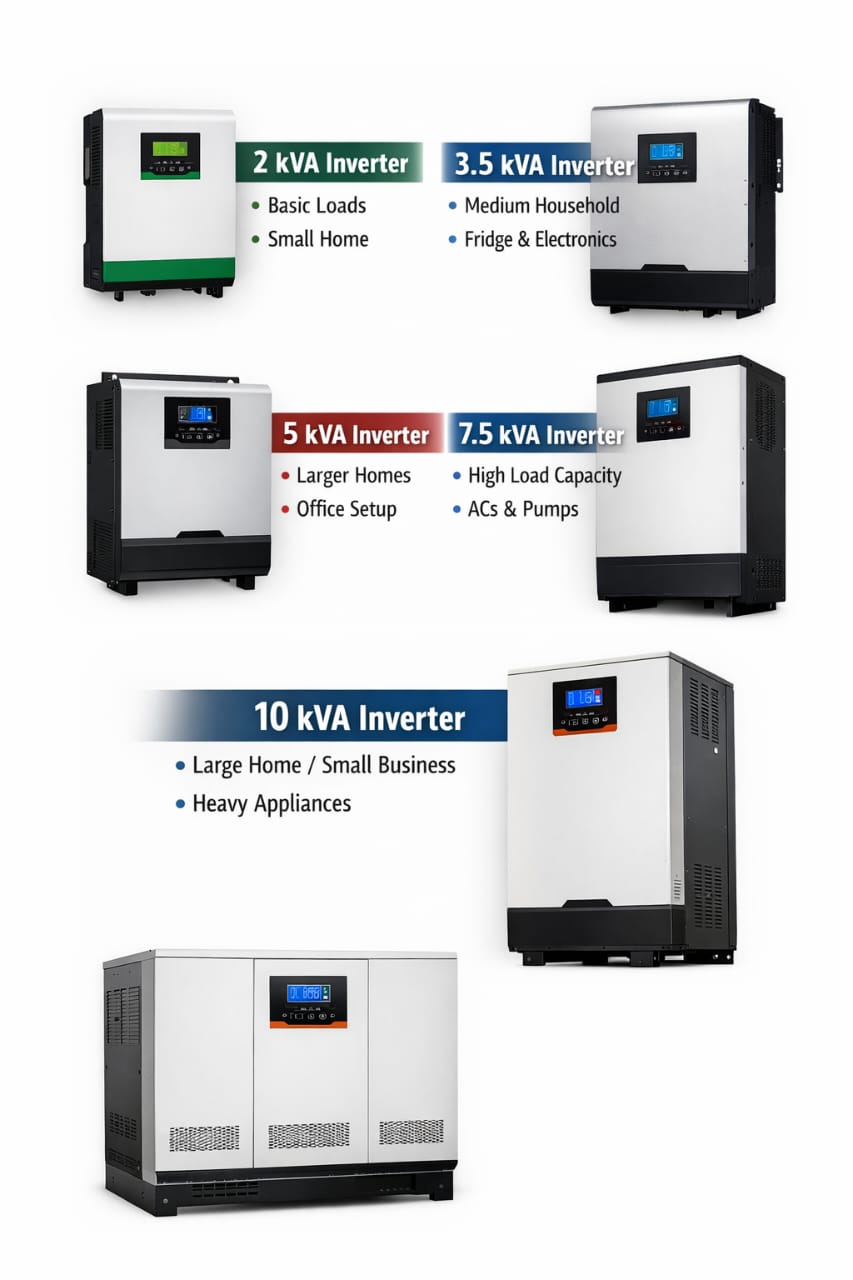
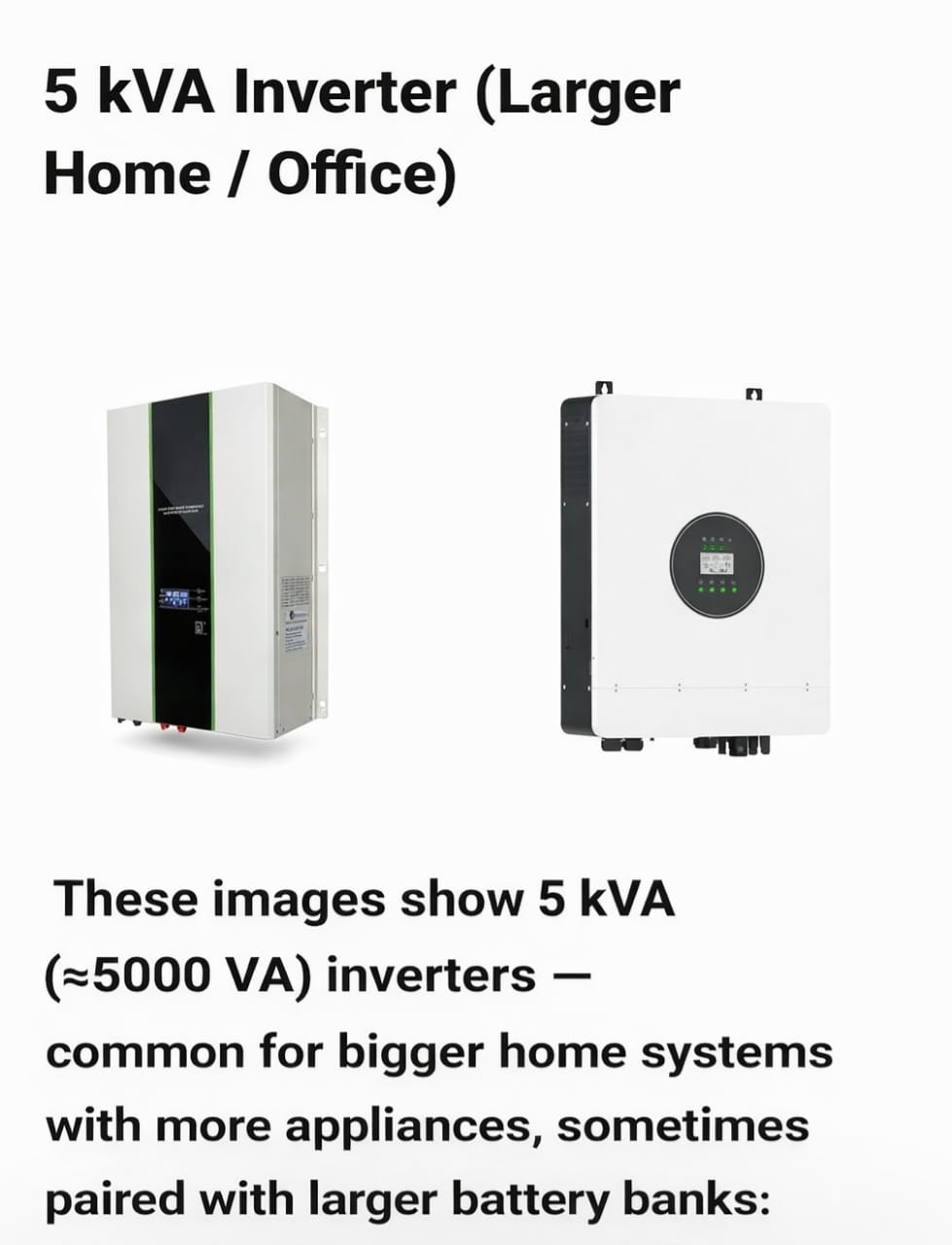
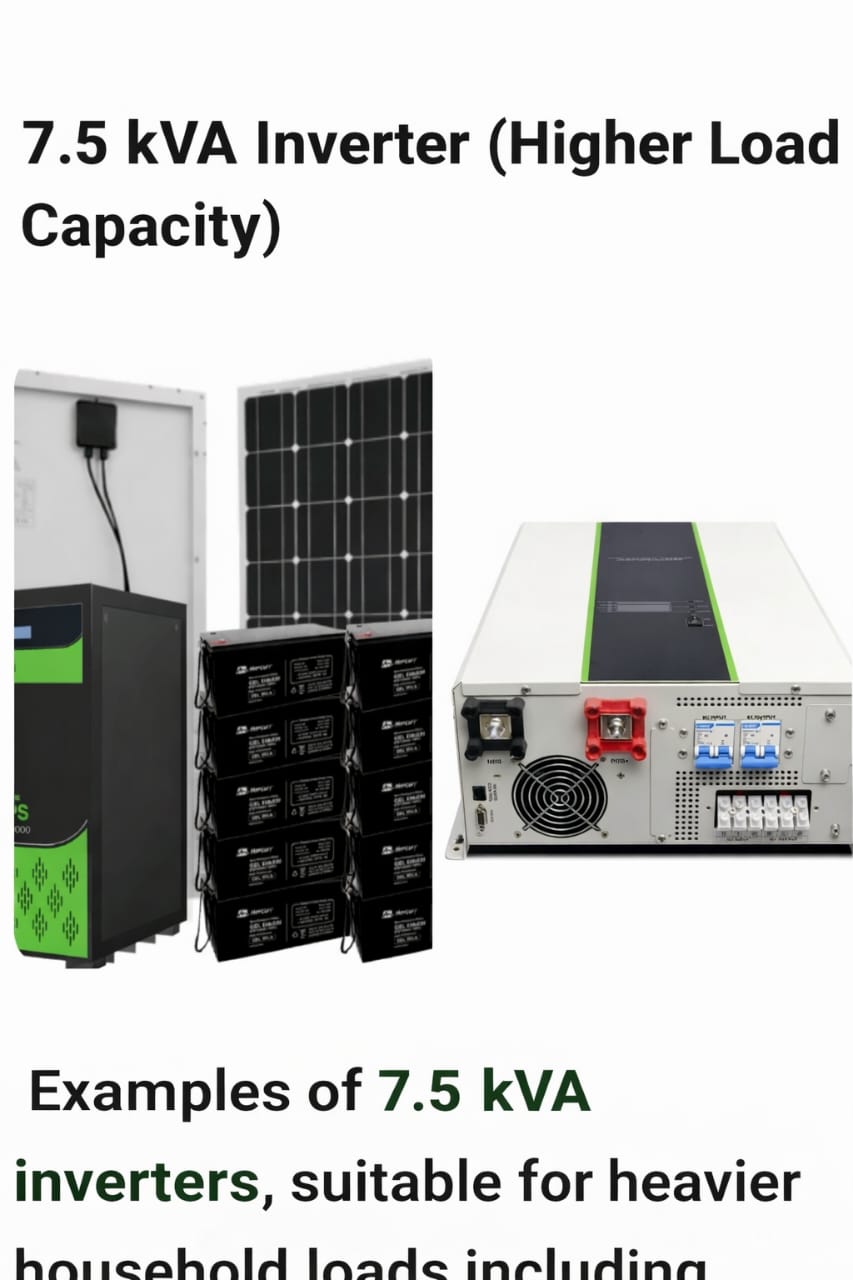
With a 5kVA / 5.5kW Inverter
You can run at the same time:
Total ≈ 2,270W (Very safe)
But if you add:
Simple Rule for Customers
Solar systems love running appliances for long hours with low watts
Solar systems hate appliances that produce heat
Heat appliances (bad for solar/battery):
SUMMARY TABLE
|
Appliance |
On-Grid |
Hybrid |
Off-Grid |
|
Lights / Fans / TV |
✅ |
✅ |
✅ |
|
Fridge / Freezer |
✅ |
✅ |
✅ |
|
AC (1HP) |
✅ |
✅ |
⚠️ |
|
Water Pump |
✅ |
✅ |
⚠️ |
|
Iron / Kettle |
✅ |
⚠️ |
❌ |
|
Microwave |
✅ |
⚠️ |
❌ |
|
Multiple ACs |
✅ |
⚠️ |
❌ |
✅ = No issue
⚠️ = Possible but not recommended on battery
❌ = Not advisable
At E & P STATES ENERGY LTD, we go beyond selling solar and renewable energy systems. We educate you, guide you, and help you choose the right solution for maximum efficiency and lasting energy satisfaction.